




Waste Reduction × Green Expansion × Closed-loop Circularity: Reshaping the Sustainable Lifestyle
Leveraging its profound expertise in driving the circular economy, FENC has established itself as a global leader in the r-PET recycling industry. By harnessing its vertically integrated global industry chain and extensive experience in cross-industry collaboration—further galvanized by the strategic expansion of its r-PET capacity—FENC actively positions itself as a pivotal link in advancing the global circular economy.
FENC harnesses its vertically integrated industry chain and a wealth of experience in cross-sector collaboration, the Company connects production, raw materials and products through systematic approaches to promote low-carbon transition throughout its value chain. Deploying green raw materials as the vanguard, FENC forms technological partnerships across several disciplines, bringing forth ground-breaking innovations. Aided by visionary green products while aiming towards sustainability, the Company steers the industry towards mono-materials and remains focused on developing circular recycling technologies.
- Waste Reduction—Trailblazing as Vanguard of Green Raw Materials
- Green Expansion–Aiming for Sustainability with Green Products
- Closed-loop Circularity–Completing the Circle of Sustainable Lifestyle
- Timeline of Advancement in FENC’s Global rPET Production Capacity
- Green Momentum: Achieving Excellence in Performance
- Co-creating a Beautiful Future Through Sustainability
Waste Reduction—Trailblazing as Vanguard of Green Raw Materials
FENC has been heavily engaged in decarbonization, promoting the use of green raw materials while creating reuse models for waste materials. Having been converting waste PET bottles into eco-friendly products such as rPET chips and recycled fibers since 1988, FENC has become the world’s largest supplier of food-grade rPET. As the industry leader, the Company continues to dive into the development and innovation of rPET technologies and applications. To tackle environmental issues caused by waste textiles across the globe, FENC is committing tremendous efforts into developing recycling technologies, utilizing chemical and physical recycling to transform waste textiles into recycled fibers. Meanwhile, its close relationships with value chain partners and vertically integrated supply chain are bringing more sustainable and eco-friendly raw materials to the world.
Technological Development–Embracing Biotechnology in Polyester Recycling
FENC has joined forces with the French biochemical company, Carbios, pairing its own textile expertise with Carbios’ polyester enzymatic biorecycling technology to break down polyester waste into high-purity monomers, purified terephthalic acid (PTA) and monoethylene glycol (MEG). The innovation has the capability of transforming complex PET waste, which was difficult to recycle in the past, through a less energy-consuming biorecycling process, boosting production flexibility and efficiency. The recycled monomers then go through polymerization and spinning at FENC, becoming bio-recycled polyester fibers as raw materials for textile products such as T-shirts. The first market application came in 2025 with the footwear introduced by Salomon, which was showcased at Paris Fashion Week. This three-party collaboration has dovetailed Carbios’ PET bio-recycling technology into FENC’s existing production lines and supply chain and delivered products with scalability. FENC’s collaborative efforts were recognized by the International Textile Manufacturers Federation, making the Company the only corporation in Taiwan among the award winners, which reflects Taiwan’s competitiveness in innovating sustainable materials and forming international partnerships.

Manufacturing Upgrade–Revolutionizing Staple Fiber Recycling Processes
To increase recycling products in FENC’s product mix, the Staple Fiber Division has been optimizing its recycling processes. The efforts delivered through an unprecedented technological development in Taiwan. The process bypasses depolymerization. Instead, the recycled materials are melted and purified during the polymerization stage, looped back to the pre-treatment processes, such as esterification in a batch reactor, and fed directly to the production line for the main process. This breakthrough allows FENC to offer product collections that are diverse and versatile, such as low-melt fibers. The purification and drying systems used during the fiber production stage have also been refined. While transforming post-industrial and post-consumer waste with complex composition into reusable raw materials, the systems give the recyclable products better performance in colors and viscosity. By implementing concrete action plans to reduce waste generation, FENC is advancing towards its quantified targets to minimize waste and overall decarbonization.
Material Breakthrough–Transforming Waste Automotive Airbag Fabric into Recycled Fibers
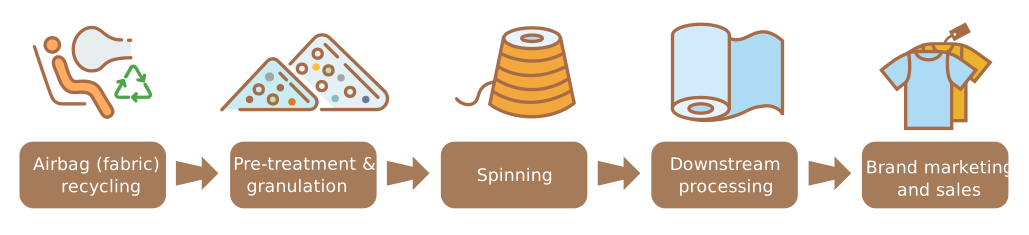
FEFC collaborates with airbag recycling companies in its innovative endeavors, transforming post-industrial and post-consumer airbags into nylon 66 airbag recycled yarn using mechanical recycling. Everest Textile Co., Ltd., an affiliate under the Far Eastern Group (FEG), then incorporates the yarn into fabric design and production, creating apparel products such as outdoor sports, recreational and yoga outfits. The vertically-integrated synergy within FEG, which involves R&D, processing and garment manufacturing, has shortened time-to-market for new materials, affirming the market feasibility of a circular material supply chain. To ensure product quality and applicability, testing processes were established to evaluate moisture content, relative viscosity, color consistency and mechanical properties, and the product has been certified by the Global Recycled Standard (GRS) . New product development evaluations are currently underway with several airbag manufacturers, and this material breakthrough was showcased at the INTERTEXTILE Shanghai Apparel Fabrics and Taipei Innovative Textile Application Show in 2025, championing the sustainability transformation of automotive materials.
Green Expansion–Aiming for Sustainability with Green Products
To tackle the effects of climate change and cater to brand customers’ rising demand for low-carbon products, FENC has tapped into its core strengths in research, development and manufacturing to create innovative green products and competitive decarbonizing solutions through value chain partnerships. Ongoing efforts are also devoted to developing eco-friendly and non-toxic products on par with international sustainability standards. While helping customers fulfill their climate commitments, FENC is expanding circular economy applications across industries.
Promoting Circular and Recyclable Design with Mono-material Polyester
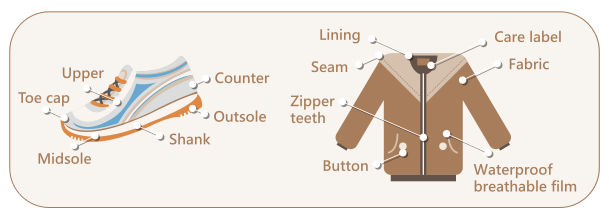
Commercially available footwear consists of tightly bonded composite materials, such as rubber soles, leather or synthetic uppers, foam midsoles and adhesives, making separation and post-consumer recycling a challenging mission. Apparel and textile products, which contain multiple components and materials such as fabric, zippers, care labels and buttons, also pose similar recycling challenges with low economic incentives. The mono-material design bypasses the complex separation process, which optimizes end of life management and ensures products are highly reusable and recyclable.
Launching the World’s First River Tracing Shoes with rTPEE Midsoles
FENC successfully overcame a technological bottleneck, bringing the textile industry closer to the vision of mono-material design by developing and introducing PET materials as critical footwear and apparel components.
Leveraging its know-how in PET modification and polymerization technologies, FENC is able to create midsoles out of homogeneous PET materials, a solution to the footwear industry’s long-standing recycling challenge due to the use of complex components. This technological breakthrough replaces conventional TPEE midsoles sourced from virgin PET with eco-friendly midsoles using recycled thermoplastic polyester elastomer (rTPEE), which is sourced from post-consumer recycled PET bottles. Specifically, FENC developed the technology to modify rPET chips, giving them elasticity and foamability as well as functionality superior to that of ethylene vinyl acetate (EVA) and thermoplastic polyurethane (TPU) while cutting carbon emissions by 10% to 30%. The innovation has obtained three patent approvals and received the ISPO Textrends Award. In 2025, FENC and French sports equipment brand Salomon developed a “explore-develop-commercialize” collaborative model, which transformed waste PET bottles into functional midsoles for the sustainable footwear, Salomon Solamphibian, commercializing the world’s first circular footwear material.
Creating FENC® LoopFlex, the High-stretch, Mono-material Fabric
Elastic fibers have traditionally been made of spandex, a challenging material for recycling and the circular economy for its highly cross-linked chemical structure. To create a solution that balances elasticity and recyclability, FENC capitalizes its vertically-integrated expertise and replaces spandex with eco-friendly polyester elastomers. The end result is FENC® LoopFlex, a high-stretch, mono-material fabric that provides exceptional support and comfort. Its premium quality was favored by an international jury panel consisting of field professionals, thus winning the A’Design Gold Award in Italy. The recognition speaks to FENC’s global competitiveness in the sustainable innovation and design integration of textile products and its efforts in creating a global value chain that advocates recycling, remanufacturing and sustainability.

Closed-loop Circularity–Completing the Circle of Sustainable Lifestyle
While receiving international attention for its advanced recycling technologies, FENC is empowering the circular momentum at home, joining forces with local governments and corporations in Taiwan to make sustainability a part of everyday life for all.
Partnering with iTrash, Maker of Smart Recycling Machines
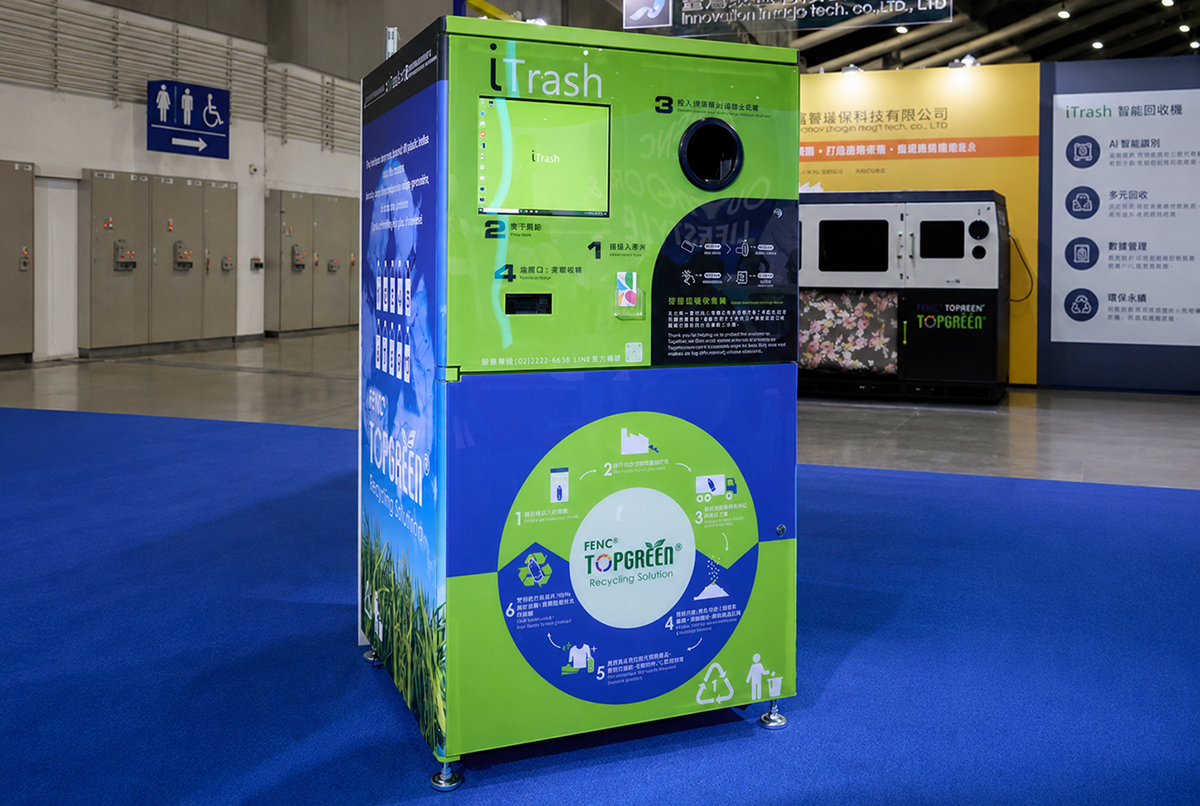
In 2025, FENC took part in a collaboration with the Taipei City Government, New Taipei City Government and iTrash, a Taiwanese producer of smart recycling machines. The intention was to expand PET bottle recycling points to public areas, such as government buildings, social housing and mass transit systems. The public may earn EasyCard credits for recycling PET bottles. As of the end of 2025, 14 iTrash machines had been installed, and the goal is to add 100 in 2026. The recycled bottles undergo a streamlined recycling process at FENC, including sorting, cleaning, decontamination and thickening, to be converted into high-quality rPET as raw materials for a wide range of products. Since 2022, FENC has been partnering with 7-ELEVEN, adding smart recycling machines at its store locations to recycle PET bottles for remanufacturing. By the end of 2025, over 65 million post-consumer PET bottles have been recycled. By connecting consumers with recycling points and expanding our integration of recycling programs, FENC significantly enhances waste diversion from landfill and completes a circular ecosystem.
Joining the Taiwan High Speed Rail Corporation Sustainable Circularity Initiative
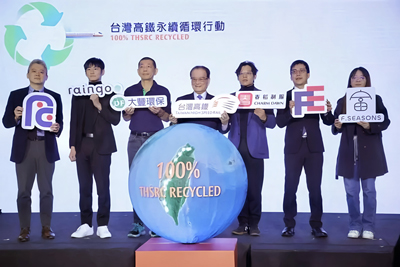
FENC channels efforts into advancing the circular economy by developing high-performance recycled materials and providing technical support for the entire industry chain. Joined by its subsidiaries, Far Eastern Apparel Co., Ltd. and OGM, FENC took part in the sustainable circularity initiative launched by the Taiwan High Speed Rail Corporation (THSRC). With the theme, “100% THSRC Recycled”, the initiative started with PET bottles recycled from the rail stations. OGM granulized the bottles into chips; FENC transformed the chips into eco-friendly yarns; Far Eastern Apparel Co., Ltd. turned the yarns into the end product, creating an innovative application of recycled waste and an exemplary case of circular textile applications. While advancing low-carbon and plastic reduction initiatives, such collaboration also energizes sustainable transformation across the industry. THSRC is planning to phase out current employee uniforms in 2026, and the new design will incorporate eco-friendly fabric sourced from post-consumer PET bottles. Seat headrests in train carriages and lids for warm beverage cups will also be gradually replaced with low-plastic materials. FENC, with help from OGM and Far Eastern Apparel Co., Ltd., will continue contributing to this initiative.
Introducing Textile-to-textile Circular Uniform Solution
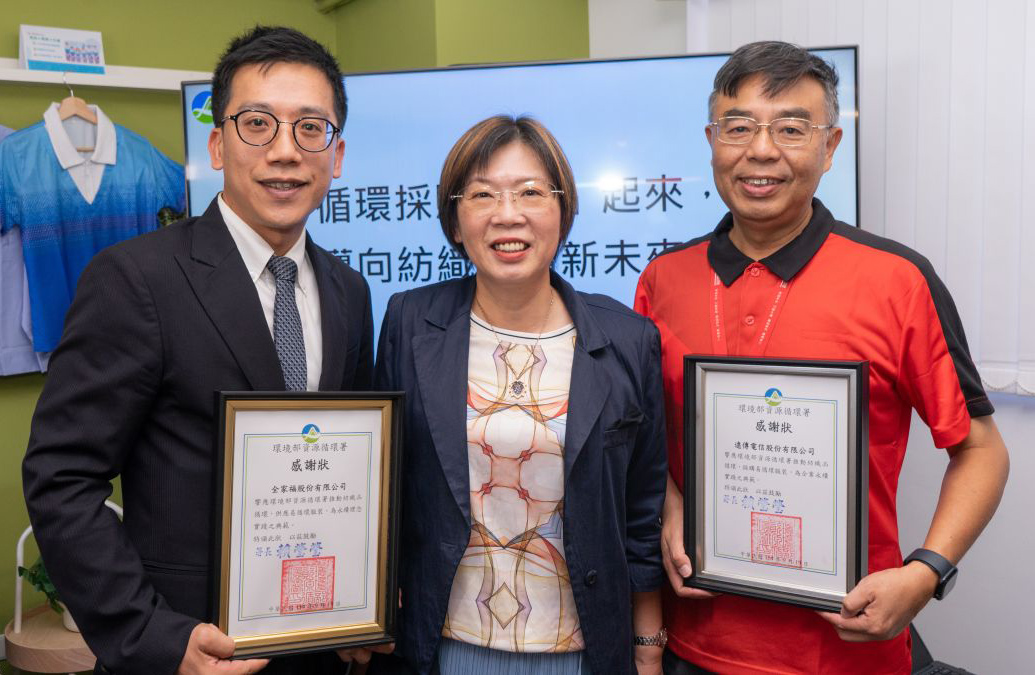
To promote sustainability transformation within the textile industry, the Resource Circulation Administration, Ministry of Environment has been promoting the circular procurement guidelines for textiles in recent years, encouraging government agencies at all levels and the private sector to prioritize environmental materials that are “recyclable and remanufacturable” during the product design and procurement stages. FENC’s subsidiary, Far Eastern Apparel Co., Ltd., has been helping businesses catalyze change at the source by adopting circular and remanufactured materials for their uniform design, as seen in the updated uniform for Far EasTone Telecommunications Co. Ltd (FET) . The replaced uniforms were made with blended textiles, while the new ones are made entirely with mono-materials. The circular design also extends to the choice of recyclable accessories, such as buttons, which is a true embodiment of the closed-loop textile-to-textile model. This project was recognized by the Resource Circulation Administration as exemplary corporate practice of incorporating green procurement and circular design. With FENC’s help, FET received a total of 9,500 summer and winter uniforms. FENC’s textile recycling system offers design, raw materials, manufacturing, recycling and remanufacturing, creating a comprehensive green solution that realizes partners’ textile-to-textile vision for uniform production while advocating circularity and decarbonization. Persuaded by FENC’s efforts, FET will go one step further, promoting circular design by adopting mono-material rPET for employees’ winter uniforms.
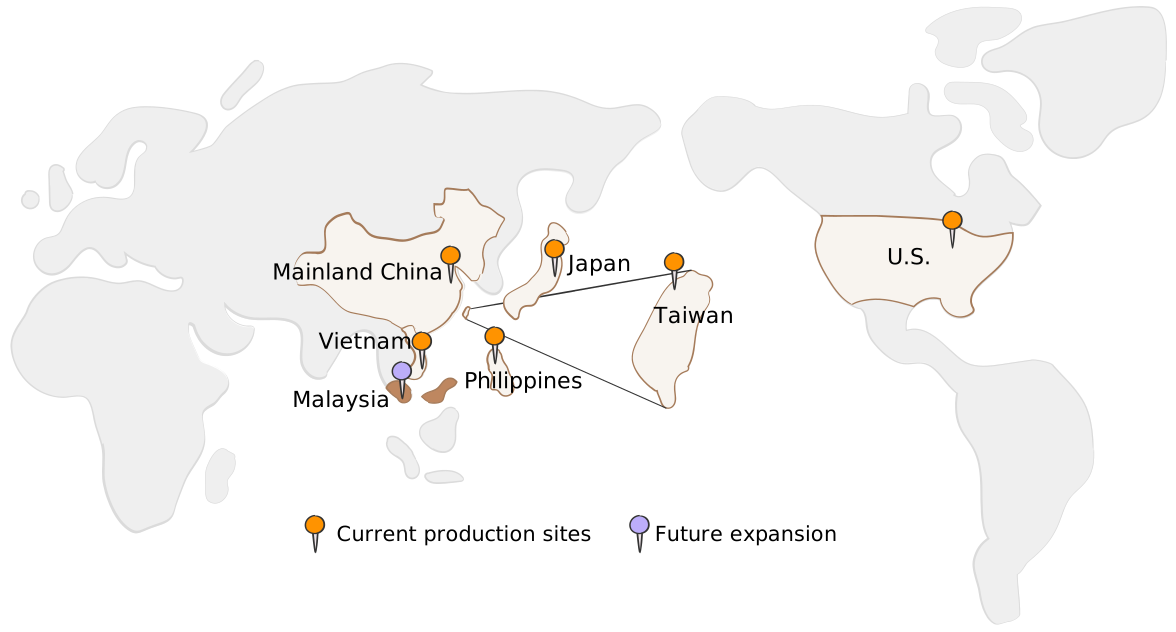
Timeline of Advancement in FENC’s Global rPET Production Capacity
-
1988FENC invested in building the first PET bottle recycling plant in Taiwan, initiating a circular economy production model through waste recycling and reuse.
-
2010FENC expanded green production into mainland China, launching rPET production at FEIS.
-
2012FIGP was established in Ibaraki Prefecture, Japan, specializing in the production of rPET.
-
2016Production began in OGM’s Plant 2 in Taiwan. Manual bottle recycling is now replaced by machines, which expands the processing capacity to over 50% of waste PET bottles in Taiwan.
-
2019FENC acquired the U.S rPET manufacturer, Phoenix Technologies.
-
2020The Tokyo plant of FIGP added the second production line.
-
2022Chip production began at plant 2 of OGM in Taiwan.
-
2023Production began at the rPET plant in the Philippines.
-
2024
- Phoenix Technologies expanded the production capacity at its rPET plant.
- Production of rPET began at the Himeji plant of FIGP.
-
2025Production of rPET began at FEPV and FEIS.
-
2026Production is scheduled to begin at the rPET plant in Malaysia.
Green Momentum: Achieving Excellence in Performance
Production Sites

rPET Industry Scale
Food-Grade rPET

Waste Reduction
Kept from polluting the environment34 billionPET bottles/year
Enough to circle Earth approximately200 times.(Note)
Note: The calculation is based on the estimate of FENC’s 2025 rPET production capacity.
GHG Reduction
The use of rPET cuts GHG emissions by61%Estimated annual carbon reduction:990,000 tCO2e /year(Note 1)
Equivalent to carbon sinks of approximately100,000hectares of forests. Equivalent to carbon emissions of annual electricity consumption from approximately500,000households. (Note 2)
Note:
- The comparison between the GHG emissions of PET chips sourced from recycled PET bottles and those from virgin PET is based on the product life cycle assessment reports, which have been third-party verified by TÜV Rheinland Taiwan in 2017 and 2021. The annual carbon reduction is an estimate based on FENC’s 2025 rPET production capacity.
- According to the 2021 Taiwan Greenhouse Gases Inventory, each hectare of forests functions as carbon sinks for 9.8 tCO2e of emissions. According to the electricity rate section on the website of Taiwan Power Company, the average monthly electricity consumption per household in 2024 was approximately 346 kWh. The calculation is based on the 2024 electricity carbon emission factor published by the Energy Administration, Ministry of Economic Affairs on April 14, 2025.
2025 Recognitions
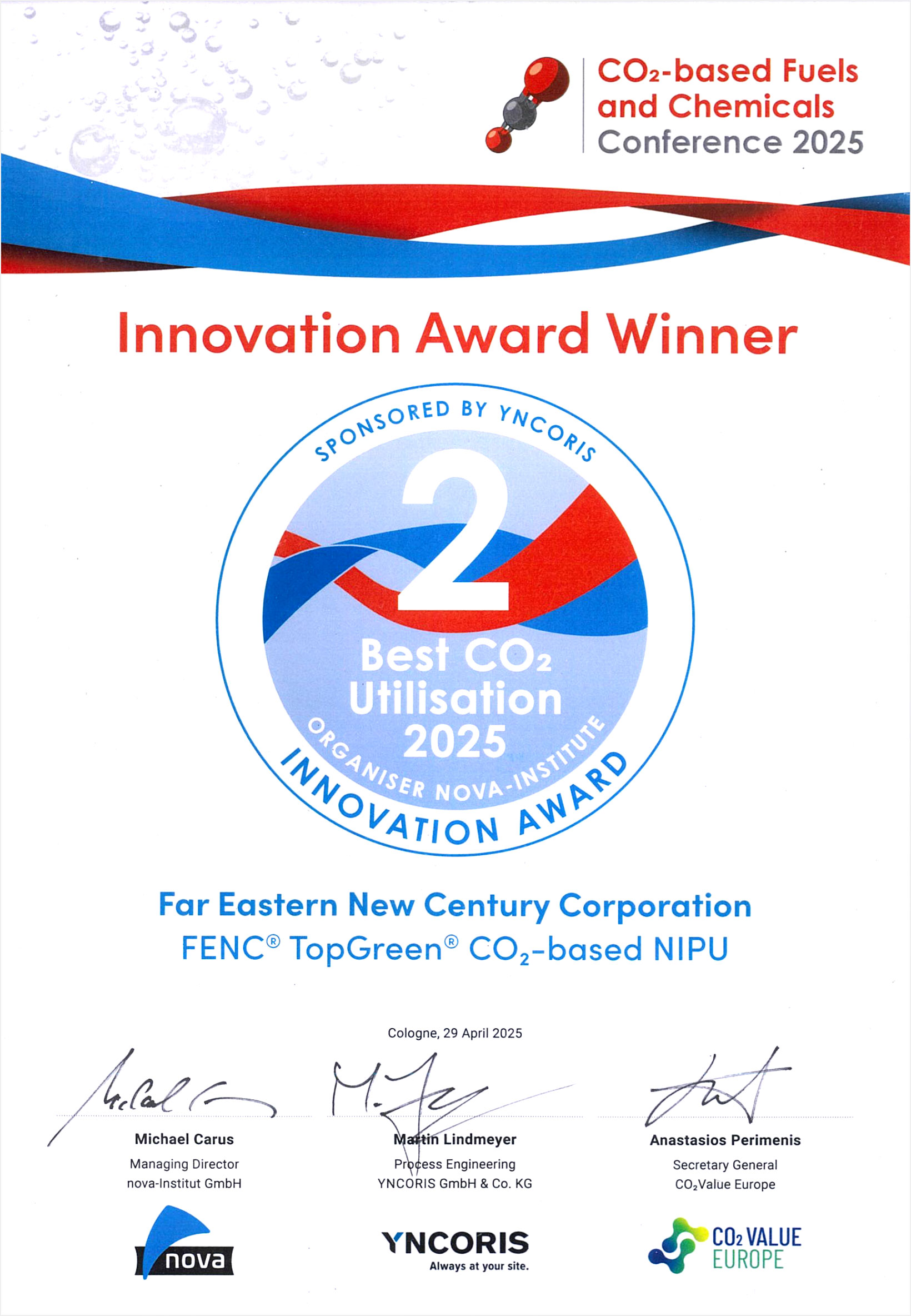
nova-Institute, Germany
Best CO2Utilisation 2025
Innovation Award
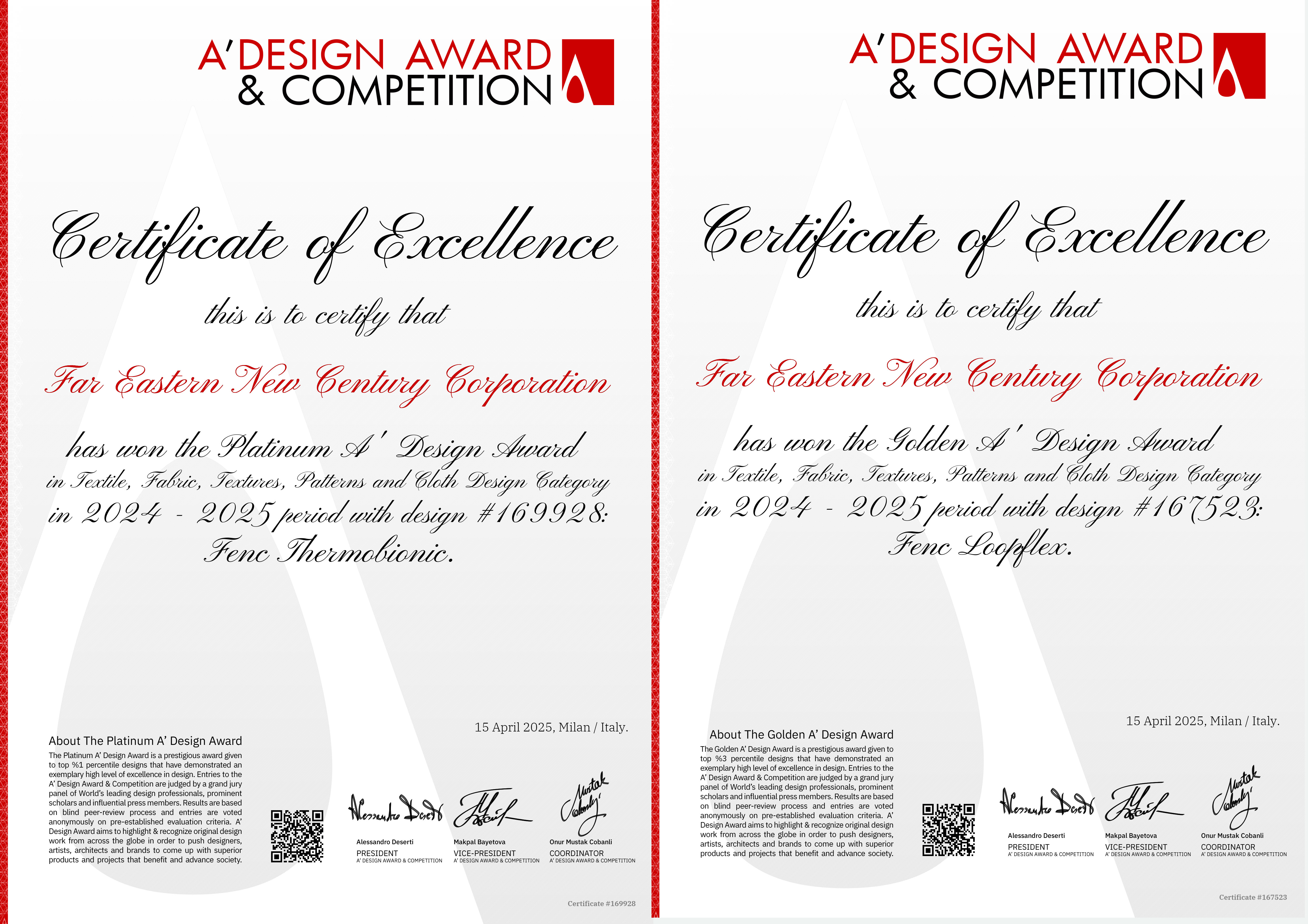
A’Design Award, Italy
Platinum Award
Gold Award
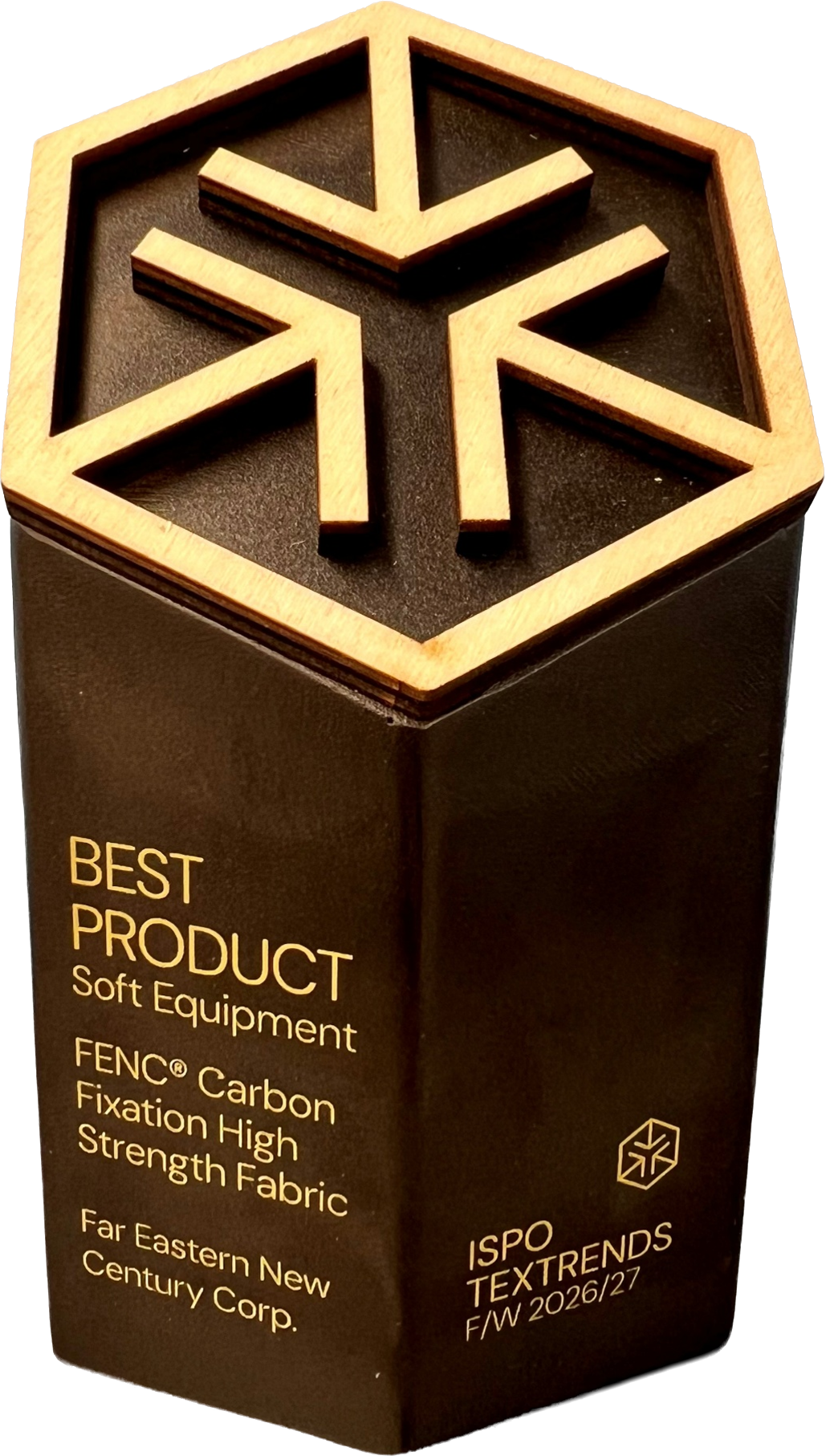
ISPO TEXTRENDS
Best Product
Top 10
Selection

Ministry of Environment
Circular Economy Excellence Awards
Source Management–Gold Award
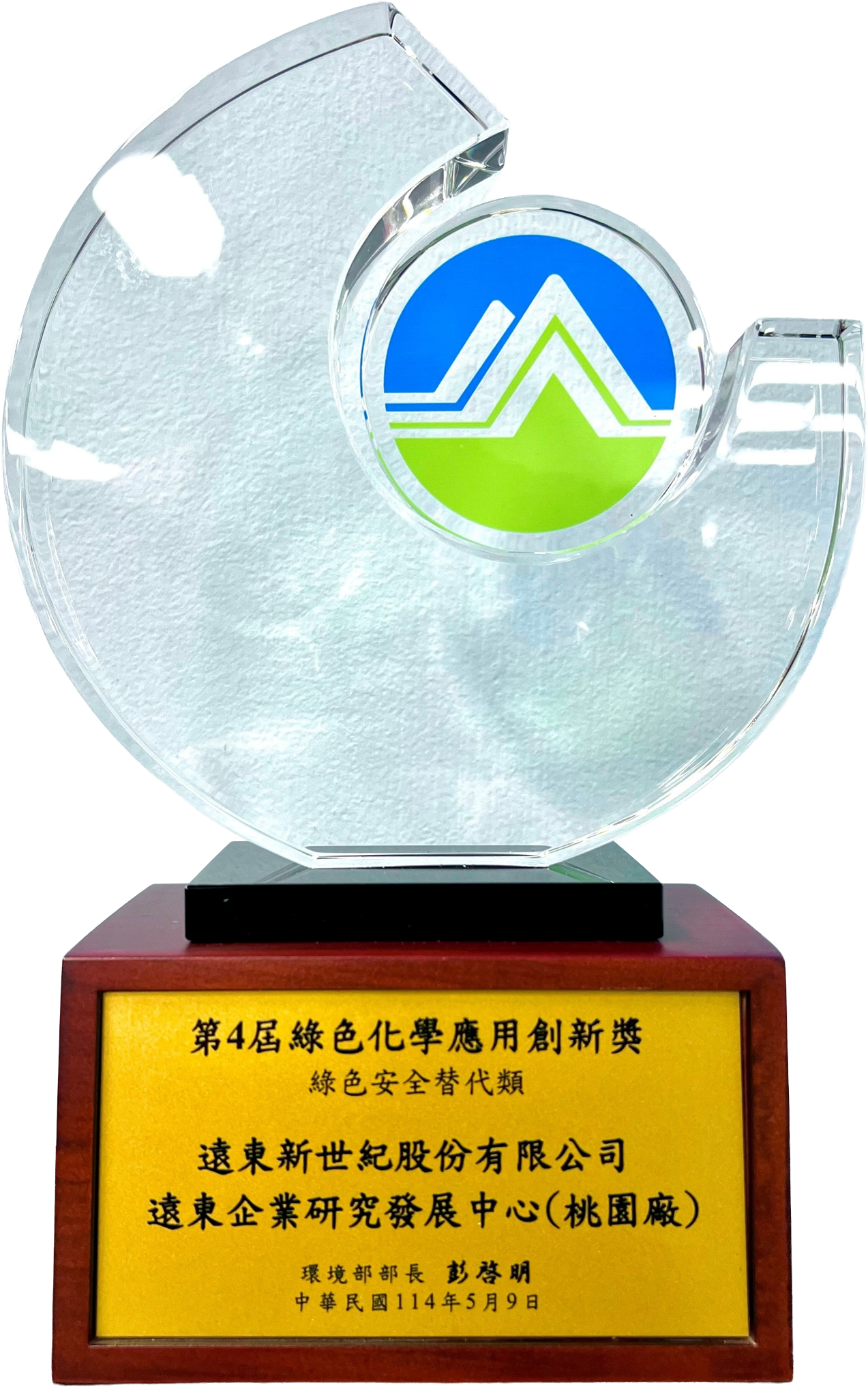
Ministry of Environment
Green Chemistry Application and Innovation Award
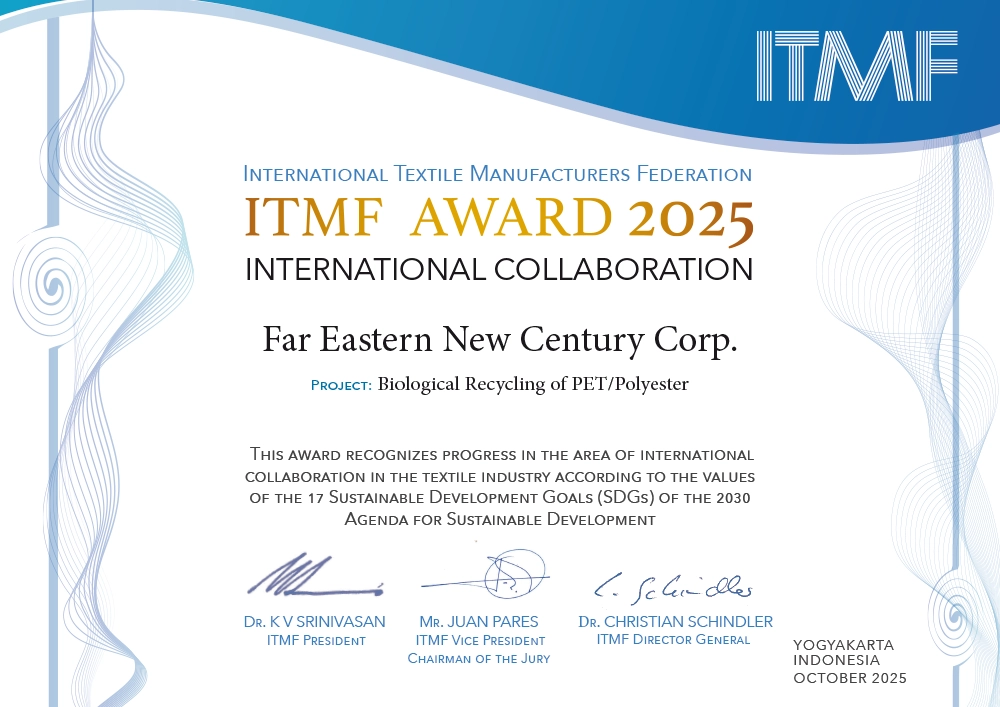
ITMF
International Collaboration Award
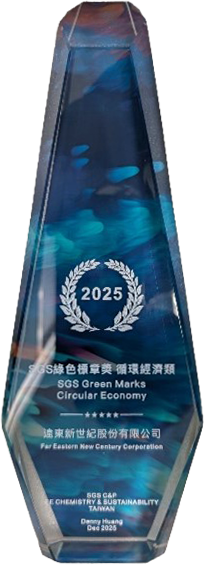
SGS
Green Marks Circular Economy Award
Product Certification
Recycled Content Certification

Green Mark

Food Grade


Co-creating a Beautiful Future Through Sustainability
FENC devotes great efforts to enhance external communication, collaboration and partnerships through its leading recycling technologies and diverse green products. While amplifying its influence through exhibitions, exchanges, case sharing and special projects, the Company also establishes robust communication mechanisms with local stakeholders, working together to reach sustainable development goals and co-create a green, beautiful future.
Participating in SDG Asia
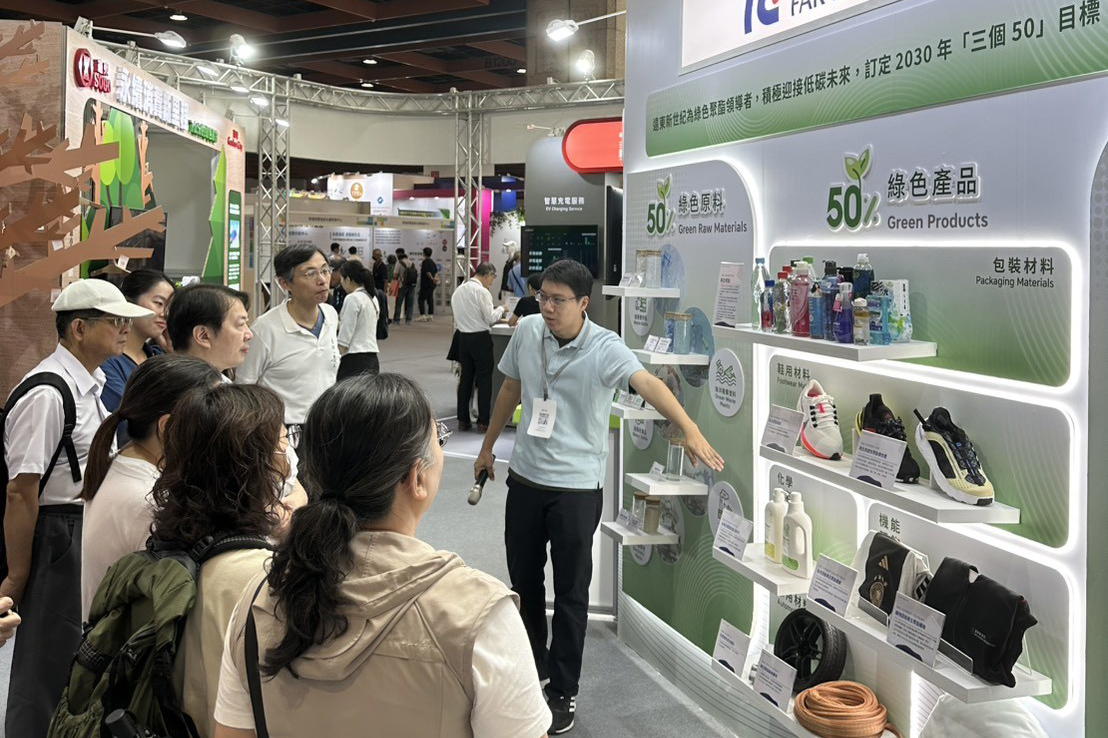
The 2025 4th SDG Asia was held between September 11 and 13 at Exhibition Hall 1 of Taipei World Trade Center, during which, FENC and its FEG affiliates shared their latest achievements in low-carbon transition and the circular economy. As a global leader in the green PET industry, FENC has established a “three-50s” strategy, aiming for 50% carbon reduction, 50% green products and 50% green raw materials by 2030, and the expo was an opportune event to show its progress. To reach 50% carbon reduction in the net-zero era, FENC has strategies in place across its global production to enhance its competitiveness amid the global push for decarbonization. To advocate the circular economy and materials, FENC showcased its leading PET bottle recycling technologies with expansive applications covering the recycling of textiles, factory waste gas and electronic waste. FENC also presented its achievements in green product development, including rTPEE, the world’s first recycled thermoplastic polyester elastomer, which has been commercialized with Salomon for its 2025 product line. Also introduced was the world’s first laundry detergent and dishwashing liquid containing rPET surfactants, which brought sustainability close to everyday living. The 2025 expo attracted over 50,000 visitors and more than 640 exhibitors, both have set a record. FENC built its booth with low-carbon and recyclable materials. Equipped with audio-visual and interactive design, the Company’s exhibition fully demonstrated its environmental and sustainable philosophy, which was commended with the 2025 Platinum SDG Asia Exhibition Award.
Speaking Online at Bottle to Bottle–A Recycling Gathering
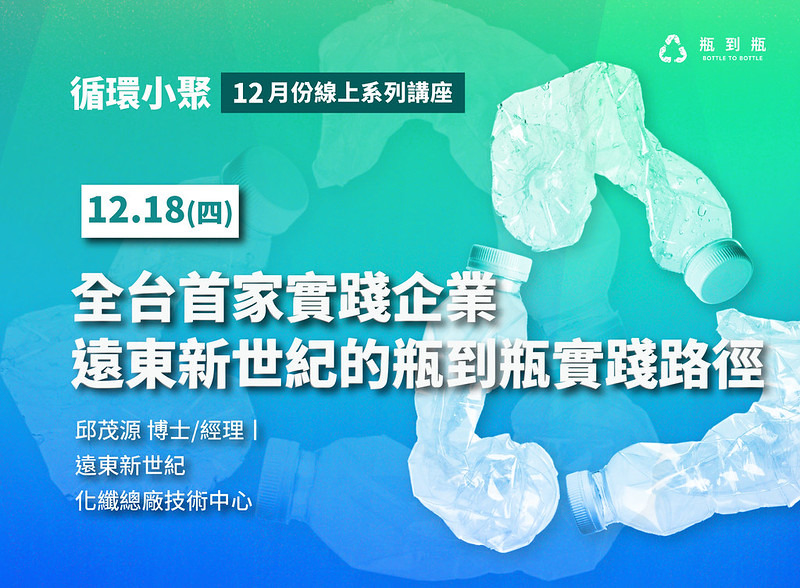
FENC was invited to participate in the webinar, Bottle to Bottle–A Recycling Gathering, on December 18. The event was hosted by the Trust in Nature Foundation, which promotes environmental education and information, and SynerGood Co., Ltd., which has extensive experience in event organization and sustainable communication. Dr. Chiu Mao-yuan, Manager under the Polyester Business, attended the event and shared FENC’s experience in bottle-to-bottle (B2B) operations. As the first corporation in Taiwan with the bottle-to-bottle practice, FENC has been dedicating efforts to developing and implementing circular strategies, which transform waste into high-value recycled resources. In 2022, FENC solidified its position as the B2B leader by being the first corporation in Taiwan to obtain the letter of no objection from the Food and Drug Administration to produce rPET food contact materials using rPET chips. Dr. Chiu’s speech shared the history and development of PET bottle recycling in Taiwan as well as the technical process involved in the recycling, sorting, cleaning and production of rPET chips for food-grade applications. He explained how advanced recycling technologies were deployed to convert post-consumer PET bottles into premium-quality rPET for food containers. He also discussed FENC’s experience in promoting the circular economy, including key challenges in developing B2B technologies, quality and food safety management and potential applications of recycled materials in the food packaging sector. It is the hope that by sharing these insights, the public may gain a better understanding of the value of recycled plastics as a way to boost market application of circular materials.
This webinar attracted 150 professionals from a broad mix of sectors covering the academia and research institutions as well as the service and information technology industries, a sign that circular materials and recycled plastics have garnered widespread attention in the professional world. Through this interdisciplinary exchange, FENC explored the course of development for recycled food contact materials with experts and businesses specializing in recycled plastics. By engaging the public on the subject of circular economy, FENC is establishing partnerships to champion recycling and sustainability.
Serving on the Translation Review Committee for CTI Sector Guidance–Fashion and Textile
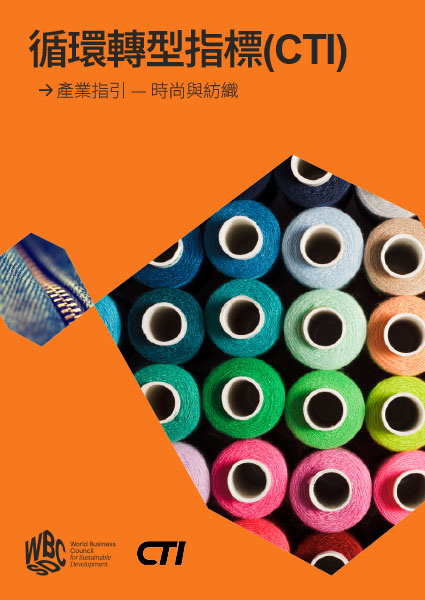
In 2022, the Business Council for Sustainable Development Taiwan (BCSD Taiwan) introduced the Circular Transformation Indicator (CTI) to Taiwan as an international management framework to assist companies with quantifying their progress in circular transformation. BCSD Taiwan also published three CTI sector guidance documents, including the electronics devices, chemical industry, and fashion and textile, which provide computational methodologies and business case studies to address challenges in industry applications. To ensure translation accuracy and the use of appropriate language register for the corporate context, BCSD Taiwan invited experts across sectors to review the Chinese translation. Fanny Liao, Executive Vice President of R&D Center, was invited to serve on the review committee for the translation of the CTI Sector Guidance–Fashion and Textile. The invitation is a testimony to FENC’s influence in the promotion of international management tools for the circular economy in the professional world. The experience also highlights the Company’s leading status in resource circularity and sustainable development. The traditional Chinese version of the sector guidance was released in August 2025, which serves to enhance the localization and application of CTI in Taiwan. While strengthening its professional influence, the participation also keeps FENC up to date on the latest development for international standards, which bolsters its strategies towards reaching ESG and circular goals and helps the Company create lasting impacts on corporate sustainability.
Promoting Bottle to Bottle with Jeplan and Ito En in Miyazaki Prefecture, Japan
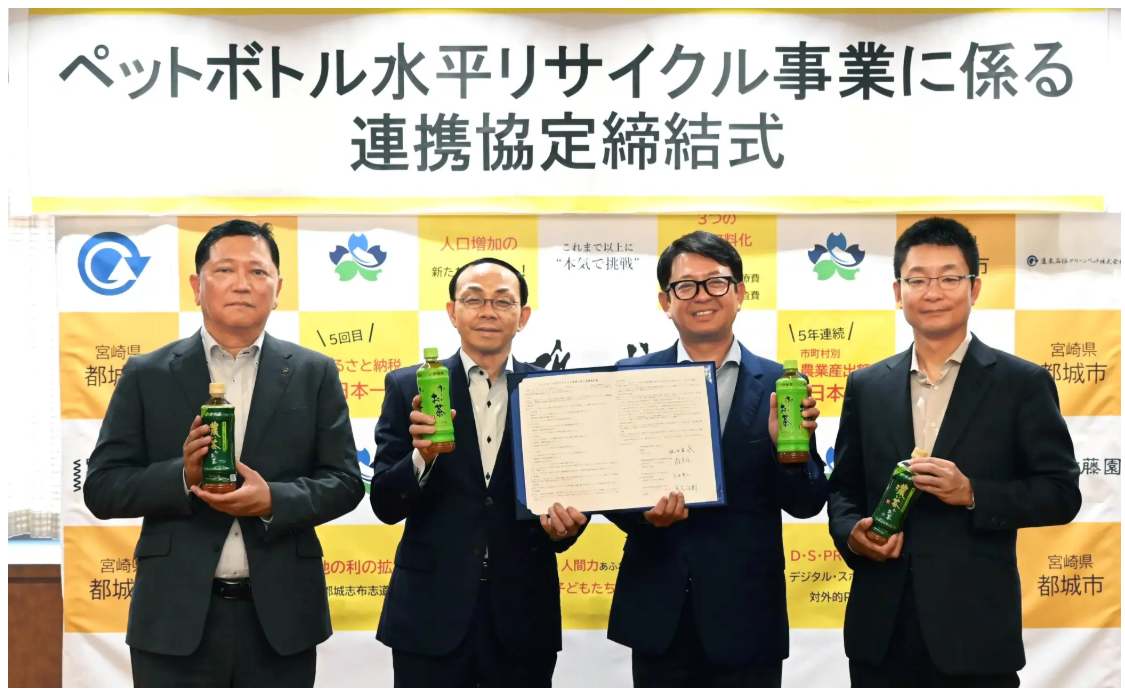
FIGP, Japan’s largest rPET supplier, has formed an alliance to promote the recycling of PET bottles with Jeplan, a Japanese recycling company, and Ito En, Ltd., the most well-known tea brand in Miyazaki Prefecture. The tripartite cooperation agreement was signed on August 6, 2025, establishing Japan’s first cross-company recycling model utilizing multiple recycling technologies. The post-consumer PET bottles recycled locally are processed by FIGP through mechanical recycling and converted into rPET. The powdery residue left behind during the mechanical recycling process is chemically recycled by Jeplan to maximize the recycling rate. Ito En, Ltd. then bottles its beverage products using the rPET containers to complete the loop. This project brings together the strengths of all three companies and the best of mechanical and chemical recycling methods, creating an unprecedented format of recycling collaboration in Japan that integrates technologies, boosts recycling volume and meets product demand. While laying a strong foundation for future long-term partnerships, by increasing the use of recycled materials, this model has delivered tangible environmental benefits in Japan.