



Creating a Carbon Footprint Model for Textiles and Apparel with the Brand Customer to Promote a Low-carbon Supply Chain

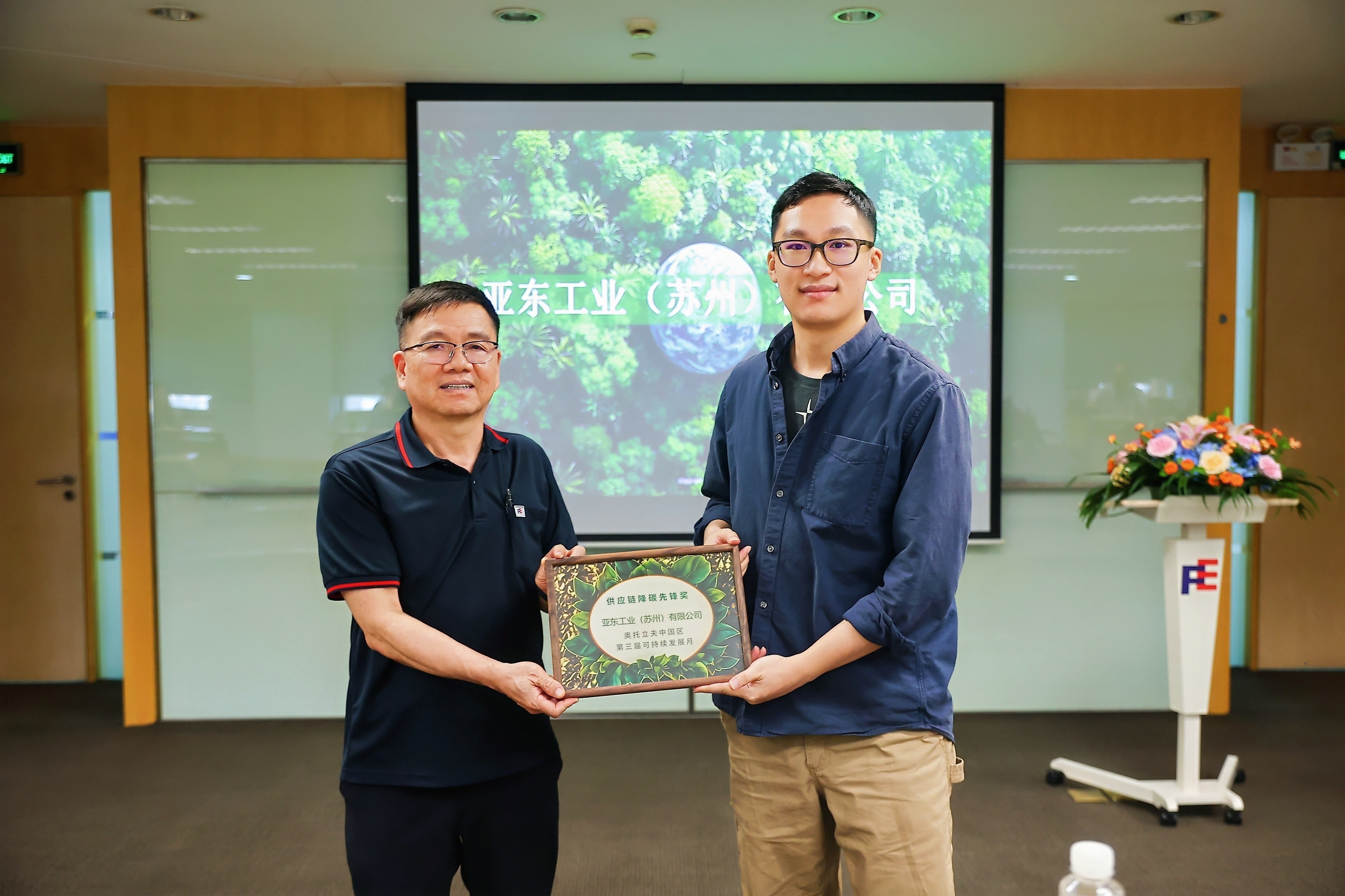
FEAZ has been working with its international brand customer and Tsinghua University in Beijing on a carbon footprint management project for textiles and apparel. The goal is to establish a scientific and verifiable method for carbon emission accounting. FENC is the first textile company in this customer’s supply chain to obtain the approval for its carbon reduction targets from the Science-Based Targets initiative (SBTi), demonstrating the strength of FENC’s carbon reduction strategies and maturity in energy management. Additionally, with its vertically integrated supply network, a spectrum spanning from polyester raw materials to textile and garment manufacturing, FENC is able to provide more comprehensive and transparent supply chain data, making the Company a key partner for the customer in the research of product carbon footprints.
Drawing on the past success of the brand customer and Tsinghua University in establishing a product life cycle assessment model for athletic footwear, FENC extended it further to cover the textile and apparel sectors, bridging a critical gap in the carbon footprint database of apparel products in mainland China.
The research project consists of two studies:
Study 1: Establishing a carbon footprint model for textile and apparel products
The study involves the use of two representative sportswear products as the case studies to construct a product carbon footprint model that covers the entire life cycle, meaning all product stages, such as the procurement of raw material, production, processing, shipping, consumer consumption and disposal. The results will be used to establish standardized product carbon emission coefficients, and the data will form a key basis for calculating the carbon footprint of apparel products in the future.
Study 2: Planning Carbon Reduction Pathways for Sports Apparel Production
The study examines the collaboration between FENC and the brand customer over the past decade with a systematic review of the performance in energy conservation and emission reduction. Feasible carbon reduction measures for the future are evaluated to establish the pathway to low-carbon transition for sportswear manufacturing, which will serve as a significant strategic basis for corporations and brands in pursuing decarbonization across the supply chain.
The two studies are expected to deliver results in 2026, and an application will be filed to add the carbon emission coefficients identified through the research as a national standard applicable to the textile and apparel industries in mainland China to calculate carbon footprints. While findings from past studies had been adopted as industry or organizational standards, the brand customer will recommend using the result as a national standard, which will give the data more credibility with broader application.
By establishing carbon emission coefficients that can be widely adopted by industries, corporations and brands will be able to identify the source of processing emissions and calculate product carbon footprints with higher precision, which is beneficial for the establishment of more effective decarbonization strategies, advancing low-carbon transition in the textile and apparel industries and promoting sustainable development within these industries.