

遠東新世紀股份有限公司〈原遠東紡織〉,乃台灣規模最宏大、最多元化的紡織及相關產品製造者。本公司共分化纖、紡織、石化、土地開發與轉投資五大事業。

Sustainability Report DownloadSustainability Report Download
Sustainability Report Download
MenuMenu
Menu
Loading

Loading...

Sustainable Governance

Sustainable Governance

Corporate sustainability is built upon robust governance. FENC pursues sustainable governance to create sustainable prosperity

Scroll

Sustainable Risk Control

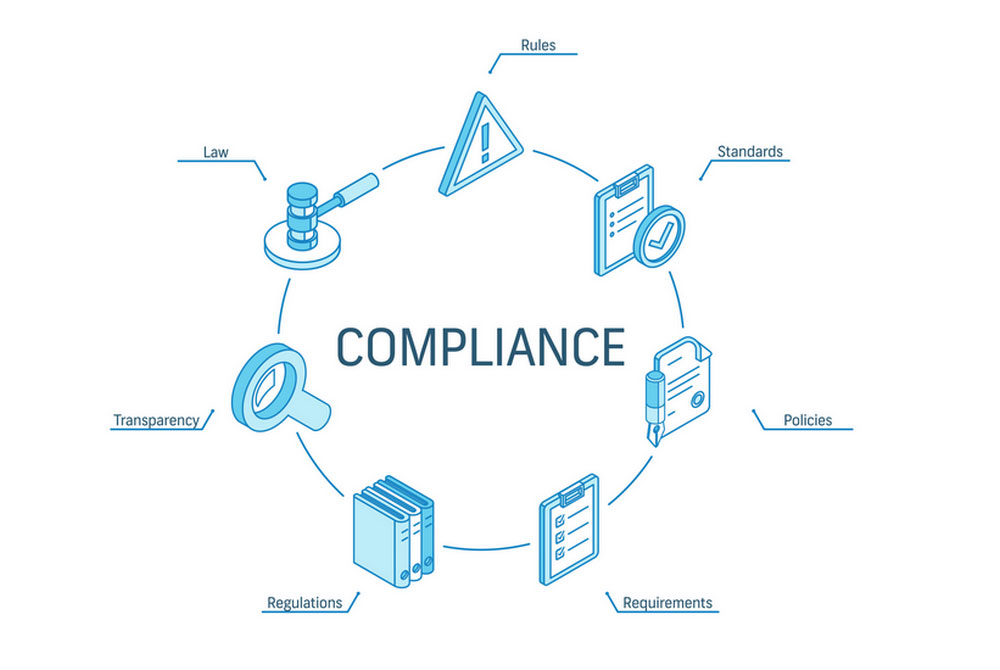
Conduct regular self-evaluation on compliance to reduce risk of violation.

In 2014, the President of Administrative Headquarters served as the chief supervisor and established Company-wide Regulatory Compliance System.

Objective
  1. Enhance employees’ legal awareness to avoid illegality.
  2. Protect corporate interests and image.
  3. Reduce operational risks for the Board and management team.
  4. Improve corporate efficiency.

Target 

Confirm key regulations concerning corporate operation. Regulations governing penalty for Board members and managers; damages to corporate image; major civil offense; administrative liability are given priority status for implementation. Areas prone to deficiency are listed as the focus for annual audit. Given the above criteria, 90 regulations and 608 control points are identified.
To help overseas operations delve further into regulatory compliance, FENC launched the plan for phased implementation of its regulatory compliance system at subsidiaries in mainland China and Vietnam in 2025. Assistance was provided to the legal staff in the two countries to review key regulations enacted by local governments concerning the subsidiaries’ production and operation activities, such as foreign investment, business registration, accounting and taxation, labor conditions, intellectual property, occupational safety, environmental protection and sustainable development. Implementation is prioritized when specific regulatory violations could lead to damages to FENC’s corporate image and interests; criminal liability for the Board members and managers; major civil and administrative liabilities. Based on these considerations, self-assessment forms for regulatory compliance have been prepared for each region, and the self-assessment is scheduled to commence in 2026 at FENC’s overseas subsidiaries depending on the progress of regulatory reviews and the development of the cross-border regulatory compliance system.  

The Implementation of 2025

All units are required to conduct self-assessments monthly to ensure compliance with field regulations, thus reducing legal risks. The Legal Department will perform on-site inspections, and the results will be submitted to the Board of Directors quarterly. Key tasks in 2025 include:

  1. Enhancing the self-evaluation compliance system functions.
    1. Implementing summary and tracking functions for non-compliance items to monitor improvements and strengthen legal risk control.
    2. Launching online reporting, reviewing, and response functions for on-site inspections to integrate compliance information and improve management efficiency.
  2. Deepening legal compliance projects for overseas operations:
    1. Extending the Company's legal compliance system to eight subsidiaries in mainland China and three subsidiaries in Vietnam.
    2. Developing localized self-assessment checklists for critical production and operation regulations in the aforementioned regions.
    3. Planning the construction of a cross-border self-evaluation platform to integrate global compliance data.
  3. Reviewing the qualifications of current Independent Directors during their term in accordance with Article 21 of the "Directions for the Compliance of the Board of Directors of Listed Companies" to confirm ongoing legal compliance.
  4. Promoting the "Workplace Unlawful Infringement Prevention Plan" and auditing its implementation across all factory sites and subsidiaries.
  5. Advocating the revised "Directions for Labor Inspection Agencies to Execute Suspension and Resumption of Work".
  6. Assisting the U.S. subsidiary in fulfilling the state government agreement regarding wastewater discharge improvements.
  7. Participating in monthly Risk Control Meetings and weekly managerial meetings at the Vietnam subsidiary, along with providing weekly regulatory update reports.
  8. Collaborating with the Information Security Department’s AIFE unit on the digital employee promotion plan to implement a "Latest Law Q&A Wizard," allowing employees to interact with large language models to master regulatory amendments.
     

Coverage Areas of Regulatory Audit

Target

Compliance Detail

Shareholder

Financial report, internal control, issuance of credit and endorsement/guarantee, acquisition and disposal of assets, convening of meeting

Customer and Competitor

Fair trade, import/export

Corporate Asset

Business accounting, tax management, patent and trademark, Copyright Act, trade secret, personal data protection

Employee

Labor condition, welfare and insurance, labor relations, labor retirement, health and safety

Society

Corporate corruption, political donation

Environment

Environmental protection


Detail

Category

Focus

Task

2024 Performance

Establish Communication
  • A clear and adequate system for the conveyance, consultation, coordination and reporting of regulatory information was established.
  • The SOP and grievance mechanisms for violations were established, including the email for reporting regulatory compliance issues and for the Audit Committee and Audit Department.
  • Designate regulatory compliance personnel.
  • Report violations and penalty immediately.
  • The compliance staff from all departments report monthly on violations and penalty.

Regulatory Update

  • Track the latest regulatory amendments and updates on a regular basis and convey the changes to all units immediately.
  • Provide advanced risk alert on violations for all units.
  • Convey the latest regulatory changes to applicable units and personnel.
  • Update Company regulations in accordance with regulatory changes.
  • Utilized robotic process automation (RPA) to extract daily regulatory updates from the Executive Yuan Gazette Online and the Financial Supervisory Commission (FSC) as well as weekly updates from sources related to the economy, health and safety, labor affairs and fire safety, and send updates to applicable personnel immediately.
  • Created a Q&A wizard in support of promoting the digital employee program to provide the latest regulatory updates, including laws promulgated by the President and regulations posted on the Executive Yuan Gazette Online within the last three years, bringing employees insights into regulatory amendments through direct dialogues with the large language model.
  • Amended FENC’s Corporate Governance Principle in response to the additional provisions in the Corporate Governance Best Practice Principles for TWSE/TPEx Listed Companies.

Regulatory Training

  • Publish information on regulatory enactment, case studies and regulatory education.
  • Conduct training on key regulatory amendments.
  • Provide in-person and online training on regulatory compliance for new employees (intellectual property/copyright/Criminal Code and corporate corruption/labor conditions/trade secret).
  • Designate appropriate staff to undergo training
  • Raised awareness of key amendments in the Fire Services Act at all production sites in Taiwan in January.
  • Promoted regulations related to chemical and hazardous substances at all production sites in Taiwan in July, including the Occupational Safety and Health Act, the Fire Services Act, the Factory Management and Counseling Act and the Toxic and Concerned Chemical Substances Control Act.
  • Shared key amendments made to the Directions for Labor Inspection Agencies Implementing Shutdown and Resumption of Work by the Ministry of Labor at all production sites in Taiwan in July.

Compliance Evaluation

  • Implementation of regulatory compliance was reported to the Board quarterly.
  • Self-evaluation checklists were established targeting the regulatory control points.
  • The Legal Department collaborated with the Human Resources Department, Labor Safety and Health Department and Audit Department to complete on-site inspections, provide guidance for all departments on improvements and follow up.
  • Ensure that suppliers and contractors of all FENC production sites comply with FENC’s corporate social responsibility policies regarding labor and human rights, health and safety, environmental protection and business ethics.
  • All departments formulate and implement improvement plans to address deficiencies identified in the self-evaluations.
  • Require suppliers and contractors to sign the FENC Supplier Code of Conduct and Corporate Social Responsibility Commitment Statement or add relevant clauses to transaction documents.
  • Conducted monthly self-evaluation to monitor regulatory compliance among all FENC departments and subsidiaries.
  • Completed the optimization of the regulatory compliance system in September:
    1. Added functions to compile and track non-compliance identified during self-evaluation at all units to monitor improvement progress and strengthen compliance risk management.
    2. Added functions for users to complete, review and respond to on-site inspection reports online, which integrates compliance information, improves operational efficiency and enhances management effectiveness.
  • Conducted on-site compliance audits at the Corporate Management in January and at all production sites in January, July and October.
  • Promoted the Workplace Violence Prevention Plan in January and examined the implementation at all production sites and subsidiaries.
  • Assisted the U.S. subsidiary to fulfill its agreement with the state government and brought its emissions up to code.


Next:Risk RankingBack
For questions or comments regarding FENC sustainability,
please contact us through email or the online forms.
We will be happy to answer them for you.
Contact Us