



Stakeholder Dialogue
We engage with and respond to stakeholders in the spirit of integrity and transparency.
Seven categories of key stakeholders


Employees / Labor Union
Significance to FENC
Employees are FENC’s most valuable asset. The Company offers enhanced benefits and career development to build solidarity and co-create a sustainable future.
Issues of Concern
- Employee Career Planning
- Operational Safety and Occupational Safety
- Green Products
- Sustainable Corporate Image
- Workplace Diversity and Inclusion
- Environmental Management
Communication Channel and Frequency
1Yearly
2Quarterly
3Monthly
4Weekly
5Irregular
6Other
External Meetings
13
Internal Meetings
123456
Training/Trial/Drill
1356
Promotional Campaign
3
Visits/Exchanges
35
Review/Evaluation/Audit
1256
Survey/Questionnaire
1
Grievance/Comment Box
5
Other
5
Building Two-way Communication Through Global Employee Satisfaction Surveys
FENC treats each and every employee as a key stakeholder. To make sure employees’ opinions are effectively incorporated into management decisions, the Company has established a two-way communication system. Every two years, an employee satisfaction survey is administered across FENC’s global locations through a third-party professional organization, which also conducts the subsequent survey analysis. Respondents are provided with multilingual versions and the option to stay anonymous, which allows all employees to fully express their opinions with safety and trust assured. It is more than a tool for gaining insights into employees’ feelings. It is also an important platform for ongoing FENC-employee dialogues.
After the results are compiled and analyzed, key issues for each FENC site are identified and reported during the management meeting. Specific action plans for improvement are developed through joint efforts and incorporated into the annual management objectives with follow-up tracking to ensure the effectiveness of the implementation.
The 2025 global employee satisfaction survey achieved 100% coverage with an 89% response rate. The overall satisfaction reached 94%, which is a 6.8% increase from the previous survey. Aside from acknowledging FENC’s sustained growth, 97% of the respondents expressed their approval of and took pride in FENC’s dedication to ESG. As to feedback concerning issues such as career development and intergenerational communication, the Company has taken action by planning multiple development programs, devoting persistent efforts to respond to employee feedback.
FENC firmly believes that the sure path to higher employee engagement and group cohesiveness is through consistent and transparent dialogues as well as strong psychological safety and organizational trust, which are also the pillars of human capital, the solid support for FENC’s long-term development and sustainability.
After the results are compiled and analyzed, key issues for each FENC site are identified and reported during the management meeting. Specific action plans for improvement are developed through joint efforts and incorporated into the annual management objectives with follow-up tracking to ensure the effectiveness of the implementation.
The 2025 global employee satisfaction survey achieved 100% coverage with an 89% response rate. The overall satisfaction reached 94%, which is a 6.8% increase from the previous survey. Aside from acknowledging FENC’s sustained growth, 97% of the respondents expressed their approval of and took pride in FENC’s dedication to ESG. As to feedback concerning issues such as career development and intergenerational communication, the Company has taken action by planning multiple development programs, devoting persistent efforts to respond to employee feedback.
FENC firmly believes that the sure path to higher employee engagement and group cohesiveness is through consistent and transparent dialogues as well as strong psychological safety and organizational trust, which are also the pillars of human capital, the solid support for FENC’s long-term development and sustainability.
Direct Customers
Significance to FENC
The trust of direct customers can lead to sales success. FENC must lead the way, advancing brand values for customers through innovative products.
Issues of Concern
- Product Accountability and Life Cycle Assessment
- Green Products
- Environmental Management
- Sustainable Corporate Image
- Process and Product Innovation
Communication Channel and Frequency
1Yearly
2Quarterly
3Monthly
4Weekly
5Irregular
6Other
External Meetings
123456
Internal Meetings
5
Training/Trial/Drill
6
Visits/Exchanges
123456
Review/Evaluation/Audit
156
Survey/Questionnaire
156
Other
5
Creating a Carbon Footprint Model for Textiles and Apparel with the Brand Customer to Promote a Low-carbon Supply Chain
FEAZ has been working with its international brand customer and Tsinghua University in Beijing on a carbon footprint management project for textiles and apparel. The goal is to establish a scientific and verifiable method for carbon emission accounting. FENC is the first textile company in this customer’s supply chain to obtain the approval for its carbon reduction targets from the Science-Based Targets initiative (SBTi), demonstrating the strength of FENC’s carbon reduction strategies and maturity in energy management. Additionally, with its vertically integrated supply network, a spectrum spanning from polyester raw materials to textile and garment manufacturing, FENC is able to provide more comprehensive and transparent supply chain data, making the Company a key partner for the customer in the research of product carbon footprints.
Drawing on the past success of the brand customer and Tsinghua University in establishing a product life cycle assessment model for athletic footwear, FENC extended it further to cover the textile and apparel sectors, bridging a critical gap in the carbon footprint database of apparel products in mainland China.
The research project consists of two studies:
Study 1: Establishing a carbon footprint model for textile and apparel products
The study involves the use of two representative sportswear products as the case studies to construct a product carbon footprint model that covers the entire life cycle, meaning all product stages, such as the procurement of raw material, production, processing, shipping, consumer consumption and disposal. The results will be used to establish standardized product carbon emission coefficients, and the data will form a key basis for calculating the carbon footprint of apparel products in the future.
Study 2: Planning Carbon Reduction Pathways for Sports Apparel Production
The study examines the collaboration between FENC and the brand customer over the past decade with a systematic review of the performance in energy conservation and emission reduction. Feasible carbon reduction measures for the future are evaluated to establish the pathway to low-carbon transition for sportswear manufacturing, which will serve as a significant strategic basis for corporations and brands in pursuing decarbonization across the supply chain.
The two studies are expected to deliver results in 2026, and an application will be filed to add the carbon emission coefficients identified through the research as a national standard applicable to the textile and apparel industries in mainland China to calculate carbon footprints. While findings from past studies had been adopted as industry or organizational standards, the brand customer will recommend using the result as a national standard, which will give the data more credibility with broader application.
By establishing carbon emission coefficients that can be widely adopted by industries, corporations and brands will be able to identify the source of processing emissions and calculate product carbon footprints with higher precision, which is beneficial for the establishment of more effective decarbonization strategies, advancing low-carbon transition in the textile and apparel industries and promoting sustainable development within these industries.
Drawing on the past success of the brand customer and Tsinghua University in establishing a product life cycle assessment model for athletic footwear, FENC extended it further to cover the textile and apparel sectors, bridging a critical gap in the carbon footprint database of apparel products in mainland China.
The research project consists of two studies:
Study 1: Establishing a carbon footprint model for textile and apparel products
The study involves the use of two representative sportswear products as the case studies to construct a product carbon footprint model that covers the entire life cycle, meaning all product stages, such as the procurement of raw material, production, processing, shipping, consumer consumption and disposal. The results will be used to establish standardized product carbon emission coefficients, and the data will form a key basis for calculating the carbon footprint of apparel products in the future.
Study 2: Planning Carbon Reduction Pathways for Sports Apparel Production
The study examines the collaboration between FENC and the brand customer over the past decade with a systematic review of the performance in energy conservation and emission reduction. Feasible carbon reduction measures for the future are evaluated to establish the pathway to low-carbon transition for sportswear manufacturing, which will serve as a significant strategic basis for corporations and brands in pursuing decarbonization across the supply chain.
The two studies are expected to deliver results in 2026, and an application will be filed to add the carbon emission coefficients identified through the research as a national standard applicable to the textile and apparel industries in mainland China to calculate carbon footprints. While findings from past studies had been adopted as industry or organizational standards, the brand customer will recommend using the result as a national standard, which will give the data more credibility with broader application.
By establishing carbon emission coefficients that can be widely adopted by industries, corporations and brands will be able to identify the source of processing emissions and calculate product carbon footprints with higher precision, which is beneficial for the establishment of more effective decarbonization strategies, advancing low-carbon transition in the textile and apparel industries and promoting sustainable development within these industries.
Government
Significance to FENC
FENC maintains clear communication channels with governmental entities to stay on top of regulatory development, prevent violations and ensure sound operation.
Issues of Concern
- Sustainable Communities
- Environmental Management
- Land Resource Management
- Operational Safety and Occupational Safety
- Climate Strategies and Low Carbon Transition
Communication Channel and Frequency
1Yearly
2Quarterly
3Monthly
4Weekly
5Irregular
6Other
External Meetings
1256
Training/Trial/Drill
5
Promotional Campaign
15
Visits/Exchanges
135
Review/Evaluation/Audit
156
Survey/Questionnaire
5
Company Website
23
Other
5
Promoting the Development of PET Recycling Systems and Policies in the U.S.
PET Resin Producers Association (PETRA) is a leading U.S. PET industry association dedicated to promoting PET recycling and reuse, providing science-based information and engaging the government regarding related issues on behalf of the industry, and APG Polytech serves on its executive board.
In 2025, APG Polytech took part in the engagement efforts by PETRA with governmental entities in the states of Washington, New York, Texas and Tennessee, covering topics such as plastic recycling and reuse legislations and system design for Extended Producer Responsibility. APG Polytech provided recommendations from the industry perspective and urged governments to put more focus on recycling infrastructure and systems, such as tax credits for investments in recycling infrastructure and local legislations concerning investments in the circular economy, in order to attract more funds for the development of automated sorting and recycling technologies. Governmental assistance not only improves the recycling rate and reuse efficiency in the U.S., but creates more job opportunities.
As PETRA and governmental entities stay in close communication, APG Polytech demonstrates its expertise in the PET industry and provides references for the government when establishing policies, offering substantial support for the operation and development of PET recycling systems in the U.S.
In 2025, APG Polytech took part in the engagement efforts by PETRA with governmental entities in the states of Washington, New York, Texas and Tennessee, covering topics such as plastic recycling and reuse legislations and system design for Extended Producer Responsibility. APG Polytech provided recommendations from the industry perspective and urged governments to put more focus on recycling infrastructure and systems, such as tax credits for investments in recycling infrastructure and local legislations concerning investments in the circular economy, in order to attract more funds for the development of automated sorting and recycling technologies. Governmental assistance not only improves the recycling rate and reuse efficiency in the U.S., but creates more job opportunities.
As PETRA and governmental entities stay in close communication, APG Polytech demonstrates its expertise in the PET industry and provides references for the government when establishing policies, offering substantial support for the operation and development of PET recycling systems in the U.S.
Business Partners
(Suppliers / Contractors)
(Suppliers / Contractors)
Significance to FENC
FENC’s innovative products and services are built upon the raw materials and services provided by business partners. The Company creates a win-win by achieving sustainable development through strong partnerships.
Issues of Concern
- Operational Safety and Occupational Safety
- Customer Relations Management
- Product Accountability and Life Cycle Assessment
- Corporate Governance
- Green Products
- Environmental Management
Communication Channel and Frequency
1Yearly
2Quarterly
3Monthly
4Weekly
5Irregular
6Other
External Meetings
1235
Internal Meetings
12356
Training/Trial/Drill
5
Promotional Campaign
1
Visits/Exchanges
2456
Review/Evaluation/Audit
125
Survey/Questionnaire
13
Company Website
2
Other
56
Bolstering Supplier ESG Risk Control and Sustainable Partnerships
To build a resilient and sustainable supply chain, FENC has been administering the supplier ESG survey since June 2024 for a comprehensive assessment of its critical suppliers regarding the environmental, social and governance aspects of sustainable development. Environmental considerations include compliance with environmental regulations and information disclosure; the status of external verification or audits; establishment of carbon reduction targets; specific actions such as emission and waste reduction. Among the social indicators assessed are compliance with labor regulations; mechanisms for occupational safety and health management; work systems; talent training. In terms of governance, the assessment focuses on regulatory compliance; information transparency; the robustness of internal corporate policies and risk control processes.
The survey helps FENC’s procurement units gain insights into the overall ESG performance of critical suppliers, preemptively identifying potential risks and operational weaknesses in the value chain. To fully implement supply chain risk control, FENC exercises its corporate influence by implementing special coaching and improvement projects to help suppliers deemed as having significantly high risks establish sound management systems. FENC is determined to evolve from traditional transactional relationships into sustainable partnerships with suppliers, fostering mutual growth by sharing its experience, thus building a more robust supply chain ecosystem while minimizing risks. Amid persistent implementation and engagement efforts from FENC, 1,013 of its critical suppliers have completed the assessment of supplier ESG survey, which is a testimony to FENC’s commitment to reaching net zero and a sustainable future with suppliers through tangible actions.

The survey helps FENC’s procurement units gain insights into the overall ESG performance of critical suppliers, preemptively identifying potential risks and operational weaknesses in the value chain. To fully implement supply chain risk control, FENC exercises its corporate influence by implementing special coaching and improvement projects to help suppliers deemed as having significantly high risks establish sound management systems. FENC is determined to evolve from traditional transactional relationships into sustainable partnerships with suppliers, fostering mutual growth by sharing its experience, thus building a more robust supply chain ecosystem while minimizing risks. Amid persistent implementation and engagement efforts from FENC, 1,013 of its critical suppliers have completed the assessment of supplier ESG survey, which is a testimony to FENC’s commitment to reaching net zero and a sustainable future with suppliers through tangible actions.
Note: The term, “critical supplier,” refers to the supplier of FENC’s main raw materials and one that reaches NT$1 million in a single transaction with the main procurement unit within the reporting year.
External Audit Agency
Significance to FENC
FENC examines the adequacy of corporate policies through verifications conducted by external agencies and proposes specific plans to enhance sustainable competitiveness.
Issues of Concern
- Green Products
- Climate Strategies and Low Carbon Transition
- Environmental Management
- Energy and Resource Management
- Operational Safety and Occupational Safety
Communication Channel and Frequency
1Yearly
2Quarterly
3Monthly
4Weekly
5Irregular
6Other
External Meetings
15
Visits/Exchanges
16
Review/Evaluation/Audit
156
Other
15
Improving Supply Chain Transparency Through Traceability and Compliance Verification for Recycled Products
FENC ensures the traceability and compliance of recycled products through rigorous third-party verification, helping customers remain flexible and competitive when addressing new regulations and market demands through supply chain sustainability management, recycled content certification and compliance with food contact and recycling process regulations.
International Sustainability and Carbon Certification (ISCC) is an independent global certification system that verifies the legal source, content and carbon management performance of recycled and biomass raw materials across the entire supply chain. In 2025, FENC obtained the ISCC PLUS certification, which covers terephthalic acid, recycled polyester filament, industrial yarn and PET chips, the Company’s core product lines, to help customers get a head start with establishing a traceable low-carbon raw material supply chain.
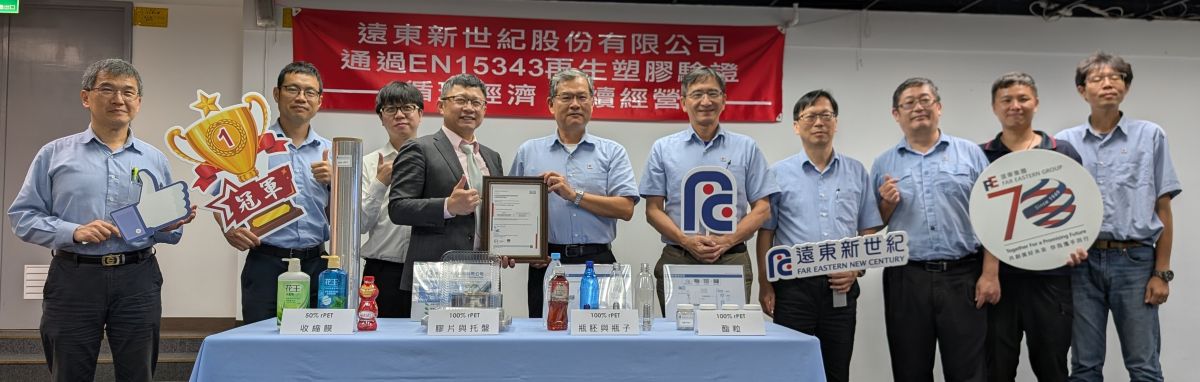
Commission Regulation (EU) 2022/1616 on recycled plastic materials and articles intended to come into contact with foods is set to come into effect in the EU in September 2026. As the first company in Taiwan to obtain both the EN 15343 certification for traceability of plastics recycling and recycled plastic content and the RecyClass Recycling Process certification, FENC is prepared. The EN15343 certification focuses on the traceability of recycled plastic sources and the calculation of recycled content. As the EU’s taxation system for plastic packaging and packaging waste kicks in, the certification serves as an objective verification of the declared recycled content for customers. Few companies outside the EU have received the EN15343 certification, and FENC took an extra step by obtaining the RecyClass Recycling Process certification, which integrates the EN15343 standards and functions as a technical supplement to Commission Regulation (EU) 2022/1616. Enhancing areas such as recycling processes and traceability management, the certifications are a boost to product competitiveness.
Japan’s positive list system under the Food Sanitation Law has gone into effect. Starting in June 2025, substances not included on the positive list will be prohibited from being used in food apparatus, containers and packaging. While PET is included as an approved base material, rPET, which involves recycling processes, must also comply with the government guidelines on the use of recycled materials to ensure the compliance with production and safety management requirements for food contact applications. FIGP obtained the certification from Japan Chemical Innovation and Inspection Institute (JCII) for rPET food packaging in 2025, which reinforces product compliance and safety.
International Sustainability and Carbon Certification (ISCC) is an independent global certification system that verifies the legal source, content and carbon management performance of recycled and biomass raw materials across the entire supply chain. In 2025, FENC obtained the ISCC PLUS certification, which covers terephthalic acid, recycled polyester filament, industrial yarn and PET chips, the Company’s core product lines, to help customers get a head start with establishing a traceable low-carbon raw material supply chain.
Commission Regulation (EU) 2022/1616 on recycled plastic materials and articles intended to come into contact with foods is set to come into effect in the EU in September 2026. As the first company in Taiwan to obtain both the EN 15343 certification for traceability of plastics recycling and recycled plastic content and the RecyClass Recycling Process certification, FENC is prepared. The EN15343 certification focuses on the traceability of recycled plastic sources and the calculation of recycled content. As the EU’s taxation system for plastic packaging and packaging waste kicks in, the certification serves as an objective verification of the declared recycled content for customers. Few companies outside the EU have received the EN15343 certification, and FENC took an extra step by obtaining the RecyClass Recycling Process certification, which integrates the EN15343 standards and functions as a technical supplement to Commission Regulation (EU) 2022/1616. Enhancing areas such as recycling processes and traceability management, the certifications are a boost to product competitiveness.
Japan’s positive list system under the Food Sanitation Law has gone into effect. Starting in June 2025, substances not included on the positive list will be prohibited from being used in food apparatus, containers and packaging. While PET is included as an approved base material, rPET, which involves recycling processes, must also comply with the government guidelines on the use of recycled materials to ensure the compliance with production and safety management requirements for food contact applications. FIGP obtained the certification from Japan Chemical Innovation and Inspection Institute (JCII) for rPET food packaging in 2025, which reinforces product compliance and safety.
Shareholder / Investor / Financial Institution
Significance to FENC
Shareholders, investors and financial institutions are significant sources of capital funding for FENC. Achieving excellence in corporate performance creates a virtuous cycle of securing stable funding by demonstrating corporate values.
Issues of Concern
- Operational Performance and Strategies
- Green Products
- Climate Strategies and Low Carbon Transition
- Environmental Management
- Corporate Governance
Communication Channel and Frequency
1Yearly
2Quarterly
3Monthly
4Weekly
5Irregular
6Other
External Meetings
125
Internal Meetings
126
Visits/Exchanges
6
Review/Evaluation/Audit
1
Other
135
From Investor Conference to ESG Engagement
Reflecting on 2025, a profound paradigm shift had occurred in the capital market when evaluating corporations. In the past, investor engagement primarily revolved around business strategies and financial indicators. However, rising sustainability awareness and increasingly stringent regulatory oversight are reshaping the format of interaction between corporations and investors, which is evolving from the traditional investor conferences to ESG risk tracking and engagement.
Challenges Facing Traditional Communication: Structural changes in capital flows
As the global capital floods into emerging technology stocks, traditional industries are pressured for capital allocation. The trend is reflected in investor engagement. In-person investor visits are down, and market activities can no longer be sustained simply with financial data. Investors are reassessing the value of traditional industries.
Opportunities to Transform: ESG Engagement as the means of profound dialogues
Despite declining in-person visits, FENC sees strong momentum in ESG engagement, which is experiencing exponential growth compared with past years.
Challenges Facing Traditional Communication: Structural changes in capital flows
As the global capital floods into emerging technology stocks, traditional industries are pressured for capital allocation. The trend is reflected in investor engagement. In-person investor visits are down, and market activities can no longer be sustained simply with financial data. Investors are reassessing the value of traditional industries.
Opportunities to Transform: ESG Engagement as the means of profound dialogues
Despite declining in-person visits, FENC sees strong momentum in ESG engagement, which is experiencing exponential growth compared with past years.
- Engagement Events During Reporting Year: In 2025, 24 ESG engagement events were held as in-depth communication efforts with investors, including formal emails, phone calls, investor conferences, shareholder meetings and press conferences with the Taiwan Stock Exchange Corporation.
- Engagement Format: Formal emails, phone calls, investor conferences, shareholder meetings and press conferences with the Taiwan Stock Exchange Corporation.
- Engagement Target: Domestic life, property and casualty insurance companies, banks, investment trusts, securities firms and media.
- Communication Level: Management
| Investor Concern | Key Point of FENC’s Response |
| Primary focus on the progress of risk control and improvement following occupational incidents at FENC sites | FENC fundamentally improves safety across all FENC production sites by incorporating AI-powered early warning; conducting comprehensive review and refinement of equipment and facilities; integrating management systems. In addition, the Company encourages the reporting of near-misses as part of its culture to enhance the fundamental safety at all plants. |
| FENC’s past R&D in alternative low-carbon raw materials, operational performance and future plans | FENC develops recycling technologies that tackle waste from the land, ocean and air, creating circular applications for waste PET bottles and fibers by transforming them into high-end products. In the future, FENC will continue developing carbon capture technologies to convert factory waste gas into innovative raw materials. |
| FENC’s evaluation mechanism, regular audit and improvement plan for suppliers’ sustainability performance | FENC’s suppliers are required to sign the Supplier Code of Conduct and Corporate Social Responsibility Commitment Statement, and critical suppliers are required to complete the supplier ESG survey. On-site inspections and quarterly audits and meetings are conducted. FENC adopts a dynamic management approach that prioritizes coaching with contract termination as an option. |
| ESG assessments, a core aspect of investors’ due diligence due to the influence of the Reference Guidelines for Recognition of Sustainable Economic Activities | Currently, in terms of standards concerning the industries in which FENC is involved, the coverage of the Reference Guidelines for Recognition of Sustainable Economic Activities is limited. It also does not cover overseas production and revenues. Thus, the applicability is low. However, FENC will align the disclosure of its sustainable economic activities with future regulatory amendments approved by the authority. |
Community
Significance to FENC
Fostering positive community relationships is essential for ensuring operational stability and driving long-term corporate growth. Through continuous community engagement and dialogue, FENC actively responds to local needs, establishes a solid foundation of mutual trust, and promotes mutual prosperity and co-development between the enterprise and local communities.
Issues of Concern
- Sustainable Communities
- Community Relations
- Land Resource Management
- Environmental Management
- Sustainable Corporate Image
Communication Channel and Frequency
1Yearly
2Quarterly
3Monthly
4Weekly
5Irregular
6Other
External Meetings
5
Promotional Campaign
6
Visits/Exchanges
1256
Other
56
Promoting Bottle-to-Bottle Recycling with Tzu Chi Through Cyber-physical Environmental Education
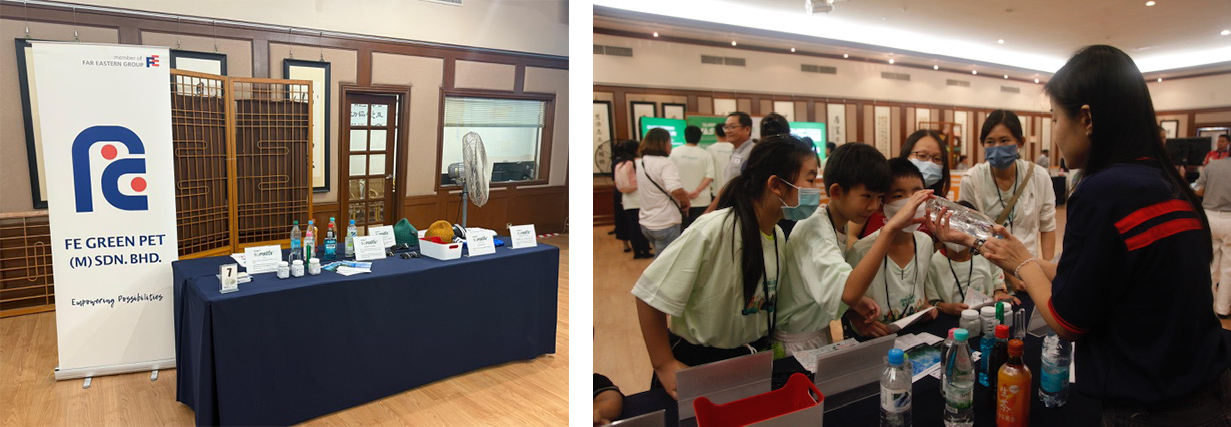
To sow the seeds of a circular economy in local communities, FENC has been maintaining a long-term partnership with the Melaka branch of Tzu Chi Foundation through its subsidiary in Malaysia and promoting the initiative, Together for a Greener Future. On October 11, 2025, FENC was invited to set up a booth at the fair held in conjunction with the Melaka State final of PaGamO Environmental Education E-Sport World Cup V, a significant environmental competition in the region.
The event brought together approximately 110 young students who advanced to the state final. FENC’s booth featured the education on plastic recycling and reuse, and its green technologies were transformed from factory applications to engaging lesson plans. Staff interacted with the students and the public and explained the complete bottle-to-bottle circularity, showcasing how waste PET bottles are recycled, cleaned and converted through cutting-edge technologies into high-quality recyclable resources. This event successfully combined the fun of PaGamO e-sports with hands-on environmental education. While raising recycling awareness among the young generation, FENC demonstrated an innovative collaborative model between businesses and non-profit organizations, fostering future talent for environmental sustainability and creating positive social impacts.
The event brought together approximately 110 young students who advanced to the state final. FENC’s booth featured the education on plastic recycling and reuse, and its green technologies were transformed from factory applications to engaging lesson plans. Staff interacted with the students and the public and explained the complete bottle-to-bottle circularity, showcasing how waste PET bottles are recycled, cleaned and converted through cutting-edge technologies into high-quality recyclable resources. This event successfully combined the fun of PaGamO e-sports with hands-on environmental education. While raising recycling awareness among the young generation, FENC demonstrated an innovative collaborative model between businesses and non-profit organizations, fostering future talent for environmental sustainability and creating positive social impacts.
Participation in External Organizations and Associations
Unit:NTD
| Types of External Participation | 2022 | 2023 | 2024 | 2025 |
| Lobbying, interest representation or similar | 0 | 0 | 0 | 0 |
| Local, regional or national political campaigns/ organizations/candidates | 0 | 0 | 0 | 0 |
| Industry related association investment | 3,038,450 | 3,116,959 | 3,296,986 | 5,395,897 |
| Others | 0 | 0 | 0 | 0 |
Name of Association | Nature of Association | Yearly Amount Contributed (Unit:NTD) |
PET EUROPE - Producers' Association | Other | 1,690,000 |
Taiwan Man-Made Fiber Industries Association | Other | 720,000 |
bluesign | Other | 652,230 |